| Prof. Li Cheng, The Hong Kong Polytechnic UniversityFellow of the Royal Society of Canada (Academy of Science) Biography: Cheng Li is a Fellow of the Royal Society of Canada, the Canadian Academy of Engineering, and the International Institute of Acoustics and Vibration (Distinguished Fellow), as well as a Fellow of the Acoustical Society of America, the Acoustical Society of China, the Institution of Mechanical Engineers (UK), the Hong Kong Institution of Engineers, and the Hong Kong Institute of Acoustics. He currently holds the Chair Professorship in Mechanical Engineering and serves as Associate Dean of the Faculty of Engineering at The Hong Kong Polytechnic University. He received his Ph.D. in Vibration and Acoustics from the Institut National des Sciences Appliquées (INSA) in France in 1989. He was a Professor at Laval University in Canada from 1992 to 2003. In 2000, he joined PolyU as Professor and Director of the Noise Control Research Centre, became Chair Professor of Mechanical Engineering in 2005, and served as Head of the Department of Mechanical Engineering from 2011 to 2014. His research interests encompass sound and vibration, structural health monitoring, smart structures, acoustic/elastic/mechanical metamaterials, and fluid–structure interaction.
|
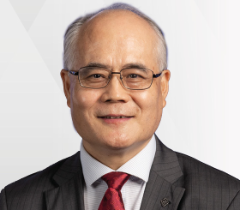

| Prof. Moubin Liu, Peking UniversityVice Dean of School of Mechanics and Engineering Science, Peking University Biography: Moubin Liu is a tenured professor and doctoral supervisor at the Department of Mechanics and Engineering Science, College of Engineering, Peking University, and a member of its Institute of Ocean Research and State Key Laboratory of Turbulence and Complex Systems. He previously worked at Beijing Jiaotong University, National University of Singapore, Idaho National Laboratory (USA), and Nanyang Technological University. In 2009, he became a professor at the Institute of Mechanics, Chinese Academy of Sciences, before moving to Peking University in late 2014. His research covers computational fluid dynamics, fluid–structure interaction, industrial software, and intelligent manufacturing. He has contributed to fundamental theories, numerical algorithms, and key technologies for multi‑physics digital‑twin simulations in extreme environments. He established the theoretical foundation of SPH methods, developed high‑order SPH algorithms, and created independently controlled software. He also developed thermal‑fluid‑structure coupling algorithms and simulation platforms for additive manufacturing, laser‑induced melting/solidification, and ablation damage. He has authored two English monographs and published over 180 SCI papers in journals such as JCP, PoF, and ACME, with over 16,300 Google Scholar citations. Since 2015, he has been consistently listed as a Highly Cited Chinese Researcher in computational mechanics by Elsevier.
|
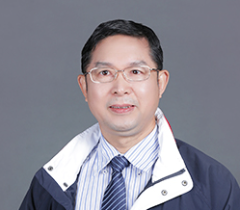
| Prof. Qiao Hu, Xi’an Jiaotong UniversityNational High-level Talents Biography: Qiao Hu is a Second‑Level Professor and doctoral supervisor at Xi’an Jiaotong University, a recipient of the National High‑level Talent Program, and the leader of the Shaanxi Provincial Science and Technology Innovation Team. He worked at a postdoctoral joint research station between Northwestern Polytechnical University and the 705 Research Institute of CSIC (2006–2008), then joined the 705 Institute until 2017, when he moved to Xi’an Jiaotong University. He now serves as Dean of the Institute of Marine Technology and Equipment and Deputy Director of the Institute of Robotics and Intelligent Systems. His research covers multi‑physics intelligent sensing for underwater robots, key technologies for amphibious bionic robots, and underwater robot swarms and mission payloads. He has led over 20 projects, including the National Key R&D Program, equipment pre‑research, and key fund projects. He has published 3 monographs, 4 translated books, over 100 papers, and holds more than 60 national invention patents. He has received the First Prize of Natural Science from the Ministry of Education and the Second Prize of Technical Invention from Shaanxi Province. He has guided students to win more than 20 awards (grand prize, first and second prizes) in national and international marine intelligent robot competitions.
|
| Prof. Xinshu Zhang, Shanghai Jiao Tong UniversityNational Young Talent Biography: Xinshu Zhang is a professor and doctoral supervisor at the School of Naval Architecture, Ocean and Civil Engineering, Shanghai Jiao Tong University, holding a Ph.D. in engineering. He has led projects including the General Program of the National Natural Science Foundation of China (NSFC) and has published over 30 journal papers (20 SCI-indexed). He serves as a member of the International Towing Tank Conference (ITTC) committee and the OMAE technical committee, and as associate editor for the Journal of Offshore Mechanics and Arctic Engineering, Journal of Hydrodynamics, and Journal of Marine Science and Application. His research focuses on fluid–structure interaction in ocean engineering, covering nonlinear wave–wave and wave–body interactions, seakeeping and maneuvering, moonpool resonance and sloshing, and dynamics of floating wind turbines and photovoltaic platforms. He has led more than 20 research projects, including national key projects, the National Key R&D Program, NSFC General Program, and pre-research funds from the Equipment Development Department. In the past five years, he has published over 70 papers in leading journals such as J. Fluid Mech., Phys. Rev. Fluids, Phys. Fluids, and Ocean Eng., with more than 50 as first/corresponding author indexed in SCI.
|
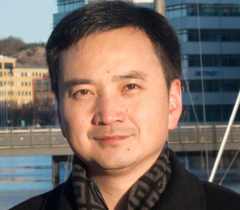
| Prof. Songzuo Liu, Harbin Engineering UniversityNational Young Talent Biography: Songzuo Liu, Ph.D., is a Professor and doctoral supervisor at the College of Underwater Acoustic Engineering, Harbin Engineering University. He currently serves as Deputy Dean of the School of Future Technology and Deputy Director of the National Key Laboratory of Underwater Acoustic Technology. He received his B.E. and Ph.D. in 2008 and 2014, respectively. His research focuses on underwater acoustic communication and detection. He has led the development of a series of underwater acoustic modems and full‑ocean‑depth acoustic release transponders. He is the Chief Scientist of a National Key R&D Program project and has undertaken over 30 research projects, including NSFC Key, General, and Youth programs. He has published more than 100 SCI/EI papers and holds over 30 authorized invention patents. He has received seven provincial/ministerial awards, including the 2023 Nomination for "Powerful Youth Scientist", the Heilongjiang Youth May Fourth Medal, and a First Prize for Provincial Science and Technology Progress. He serves as Vice Chairman of the Underwater Communication Committee of the China Communications Society and Vice Director of the Youth Work Committee of the China Shipbuilding Engineering Society. He is also an Editorial Board Member of Chinese Journal of Ship Research and Journal of Unmanned Underwater Systems.
|